Loading...
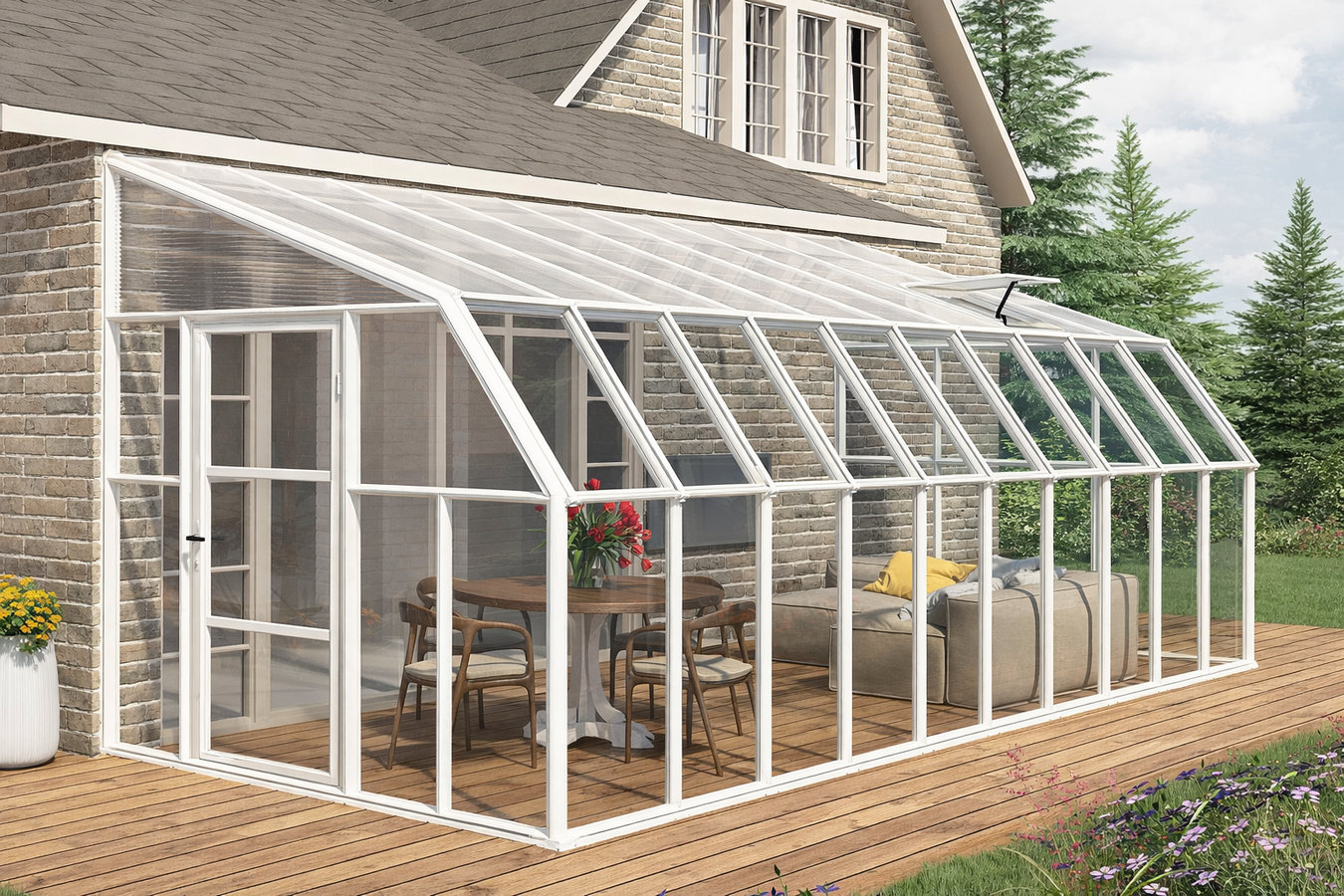
You want a light-filled room that connects your home to the outdoors without giving up comfort. We build fully glass-enclosed solariums in Paramount with the right glass, proper ventilation, and seismic anchoring - so you can actually use it year-round.
Solarium installation in Paramount means building a fully glass-enclosed room - walls and roof - attached to your home, creating a bright year-round living space while keeping you protected from wind, insects, and rain. Most projects take one to three weeks for construction once permits are approved.
A standard sunroom uses solid walls with large windows. A solarium uses glass or glazed panels for most or all of its walls and ceiling, giving you far more light and an almost greenhouse feel. That extra glass is what makes a solarium special in Paramount - and it is also why the glass and ventilation choices matter so much in Southern California heat.
If you are comparing options, a custom sunroom gives you a more traditional room with solid walls, while a solarium maximizes natural light. Both are permanent additions that require permits, foundation work, and proper seismic anchoring in LA County.
Paramount west-facing patios can become nearly unusable from late morning through early evening during summer. If you find yourself retreating indoors every time you step outside, a solarium with the right glass and ventilation gives that space back to you - shaded, cooler, and usable year-round.
If you have a patio slab sitting there not doing much, it may already be close to what a solarium needs for its foundation. A contractor can assess whether it is thick and level enough to build on, which can meaningfully reduce your overall project cost compared to pouring new concrete.
A solarium gives you a bright, functional room without tying into your home's existing roof structure or rerouting major systems. If you have been thinking about a playroom, home office, or reading nook, a solarium is often a faster and less disruptive path than a traditional room addition.
Southern California does get rain from November through March, and Santa Ana winds make open patios uncomfortable. If your current outdoor structure leaves you exposed, a fully enclosed solarium solves all of those problems at once - sealed against wind, insects, and rain while flooding your space with light.
We build custom glass-enclosed solariums designed for Paramount's climate and older housing stock. Every project starts with a slab assessment - because a solarium built on a weak 1950s or 1960s patio will shift, crack, and leak. We use tempered or laminated safety glass with low-e coatings to limit heat transfer, which is essential in a region where summer temperatures regularly reach the 90s. If you are interested in a room with more solid wall area, a patio cover installation can be a good starting point before enclosing the sides.
For homeowners who want the glass aesthetic but with a more structured feel, we also build fully enclosed rooms through our custom sunroom service. Every solarium we install is permitted through the City of Paramount and inspected before handoff - no shortcuts, no unpermitted work that creates problems at resale.
Best for homeowners who want maximum natural light and an open, greenhouse-like feel in their new room.
Suits homeowners who want the bright side walls of a solarium but prefer better insulation and weather protection overhead.
Ideal for Paramount homeowners who want to use the room comfortably through summer heat, with HVAC or mini-split integration.
For properties where the existing patio slab is too thin or damaged, we pour a new foundation before any glass goes up.
Paramount averages well over 280 sunny days per year, which makes a glass room tempting - and also makes the design decisions around heat management absolutely critical. Without the right low-e glass and a proper ventilation plan, a solarium here can become an oven from June through September. We see this on every estimate we run in the area: the glass spec and the airflow plan matter far more here than they do in a cooler climate. The California Energy Commission sets minimum glass efficiency requirements for new additions, and we follow them for every project. You can learn more about those standards at energy.ca.gov.
The seismic requirements here are also not something to gloss over. Los Angeles County is in a high seismic hazard zone, and city inspectors in Paramount check that room additions are properly anchored before signing off. Many of the homes we work on in Compton and Downey have the same postwar slab conditions as Paramount - thin concrete poured in the 1950s or 1960s that needs honest assessment before any glass structure goes up. We do that assessment on every project, and we tell you what we find before we ask you to sign anything.
We come to your home, measure the space, check the condition of your existing slab, and talk through how you plan to use the room. You will get a written estimate that breaks down what is included - no number over the phone before we have seen the site.
Once you sign a contract, we prepare drawings and submit a permit application to Paramount's Community Development Department. This step typically takes two to four weeks. We handle it - you do not need to go to city hall. Work cannot begin until the permit is approved.
If your existing slab is in good shape, we clean and level it. If a new slab is needed, concrete is poured and allowed to cure - about a week - before framing begins. The aluminum frame goes up first, then the glass panels for walls and roof. Most standard rooms take three to five days once framing starts.
After construction, a city inspector verifies the work meets Paramount's building requirements. We schedule it and are present for it. Once signed off, we walk you through the room, show you how to operate vents and doors, and give you copies of the permit and inspection records to keep with your home's paperwork.
We come to you, assess your slab honestly, and give you a written estimate - no pressure, no surprise charges. Most replies within one business day.
We manage the entire permit process with Paramount's Community Development Department and do not consider a job complete until the city inspection is signed off. That documentation protects you at resale - unpermitted additions are one of the most common deal-killers in LA County real estate.
Every solarium we build uses glass rated to limit heat transfer in Southern California's climate - not the generic spec sheet from a national catalog. We also design the ventilation plan before anything goes up, because a glass room that cooks in July is not a room you will use. The National Fenestration Rating Council sets the standards we follow: see{' '} nfrc.org.
Los Angeles County sits in a high seismic hazard zone, and Paramount building inspectors check for proper anchoring on every permitted addition. We design seismic bracing into the structure from the start - not as an add-on after the inspector flags it.
Paramount's postwar housing stock - most homes built in the 1950s and 1960s - means existing patio slabs vary widely in thickness and condition. We assess your foundation before we price the job, and we tell you exactly what it needs. A solarium on a weak slab shifts and leaks within a few years, and we would rather have that conversation now.
These proof points add up to one thing: a solarium built the right way in Paramount from day one. When the permit is closed, the inspection is signed, and the glass is spec'd for this climate, you get a room you can enjoy and a record you can stand behind when you sell.
A shaded, permanent roof structure over your existing patio - a common first step before enclosing a space into a full room.
Learn MoreA fully enclosed room with solid walls and large windows for homeowners who want more insulation and a more traditional room feel.
Learn MorePermit slots fill up - reach out now and we can lock in your timeline before summer heat arrives.